Lesson 3 of 5
What To Do
JJ says before constructing a game plan to lower your scores, you need to fully understand yourself as a golfer. That means your shot pattern, your strengths and weaknesses, and your personality. Personality traits should translate to behavior on the golf course.
Be yourself out there. If you walk slow on the sidewalk, walk slow between shots (just don't hold up play). If you are intense, you need a plan for that intensity. Playing to your strengths means the clubs you trust, the shots you can repeat and a pace that feels like you. This is where comfort and confidence come from.
How To Do It
Step 1: Who are you as a golfer?
Do you have a temper? Are you a slow walker, intense, relaxed, chatty? Write it down honestly. Your routine and your pace between shots should fit who you are.
Step 2: Where do you miss?
When you do not hit it well, does it go left or right? Knowing this tells you which side of the hole to favor and which side of the fairway to aim at.
Step 3: Why do you play?
Recreation, business or competition. JJ says your reason will dictate your passion for the game, and more passion and effort means better results. Be honest about your reason so your goals fit.
Step 4: What is the present state of your game?
Write your scoring average, your strengths and your weaknesses. Then ask JJ's hard question: do you currently have a process, or do you bounce around to different instructors and different ideas?
Step 5: Use your stats
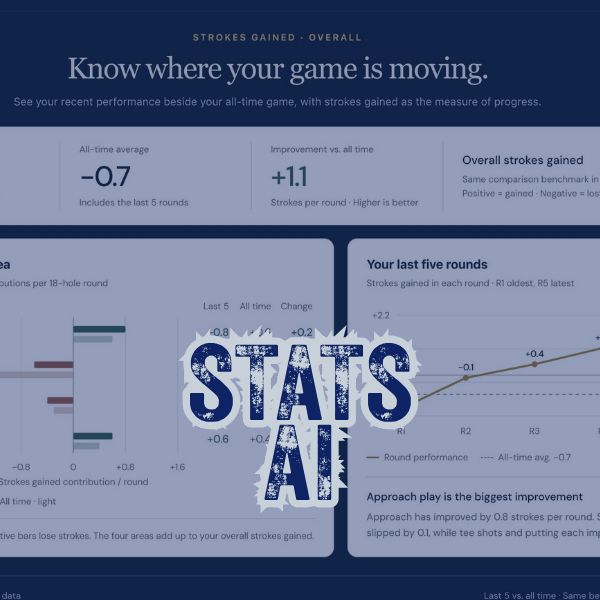
Your Post Round Review shows where shots are really going. If you get up and down well, a layup to your favorite wedge yardage is a strength play. If your driver is your best club, use it. If it is your weakest, hit the club you trust off the tee.
Pull your strengths from real rounds


Everything you save here is stored in My Playbook.
When To Use It
- Before building any game plan
- When you are choosing between two clubs off the tee
- When you lay up, so you leave your favorite yardage
Common Mistakes
- Copying how a tour player manages a course
- Forcing a pace or personality that is not yours
- Laying up to an awkward half-wedge distance
- Bouncing between instructors and ideas without a process
Practical Exercise
Be Yourself Breath
Use this on the walk to your ball. Breathe in for 4 and walk at your own pace. Hold for 4. Breathe out for 4 and let go of how anyone else plays. Hold for 4 and think of one strength.
Pattern: 4-4-4-4 seconds, 2 cycles. The voice counts each second for you.
Ready
Takeaways
- Understand yourself before you build a game plan
- Your personality should show up in your pace and routine
- Know your miss and your strengths
- Lay up to your favorite yardage
- Have one process instead of chasing ideas
Reflect
Use It Next Round
Something not going right on the course?
Tell the AI Coach what happened and get exercises picked for you.
Finished the lesson? Mark it complete to track your progress.